
Subah-e-Banaras Morning Ritual
Subah e Banaras Tour | Timings, History & Ganga Aarti Guide at Assi Ghat
Planning a Subah e Banaras Tour in Varanasi? Here’s everything you need — what the programme is, the Subah-e-Banaras timing, how it compares to the evening Ganga Aarti, and how ShriKashiTrip gets you to Assi Ghat before sunrise, every single morning.
- VenueAssi Ghat, southern Varanasi riverfront
- Subah-e-Banaras Timing~5:00-5:30 AM (45 min before sunrise)
- DurationAround 2 hours
- CostProgramme is free; guided tour has a nominal charge
- FrequencyEvery single morning, all year
- Best MonthsOctober to February
Subah e Banaras Tour: Meaning & What It Includes
A Subah e Banaras Tour takes you to Assi Ghat for “The Morning of Banaras” — a daily, pre-dawn cultural gathering that brings together Vedic chanting, a Sapta Aarti, live classical music, and open-air yoga, all before the sun fully rises over the Ganges. What started as a community initiative on 24 November 2014 has grown into one of Varanasi’s most recognisable cultural experiences, drawn from the belief that mornings in Kashi carry a different kind of energy altogether. For official details, you can also check the government-listed page for the programme on the Varanasi district administration website, which confirms the venue and schedule referenced throughout this Subah e Banaras Tour guide.
It is different from the famous evening Ganga Aarti at Dashashwamedh Ghat — Subah-e-Banaras is quieter, more participatory, and gives you a genuine look at how the city actually wakes up: locals taking their morning dip, priests beginning their rituals, and artists performing to an audience of early risers.
History of Subah-e-Banaras
Subah-e-Banaras began as an initiative led by a committee of local government officials and cultural representatives, with support from local volunteers who believed the mornings of Banaras deserved their own celebration. Over the years it has become a fixture of the city’s cultural calendar — for its first several years, no artist performed twice on its stage, with a fresh musician taking the platform every single morning.
Subah e Banaras Tour Programme Schedule
Vedic Chants & Yagya
The programme opens with Vedic mantras and a fire ceremony (Yagya), with prayers offered for peace and prosperity.
Sapta Aarti
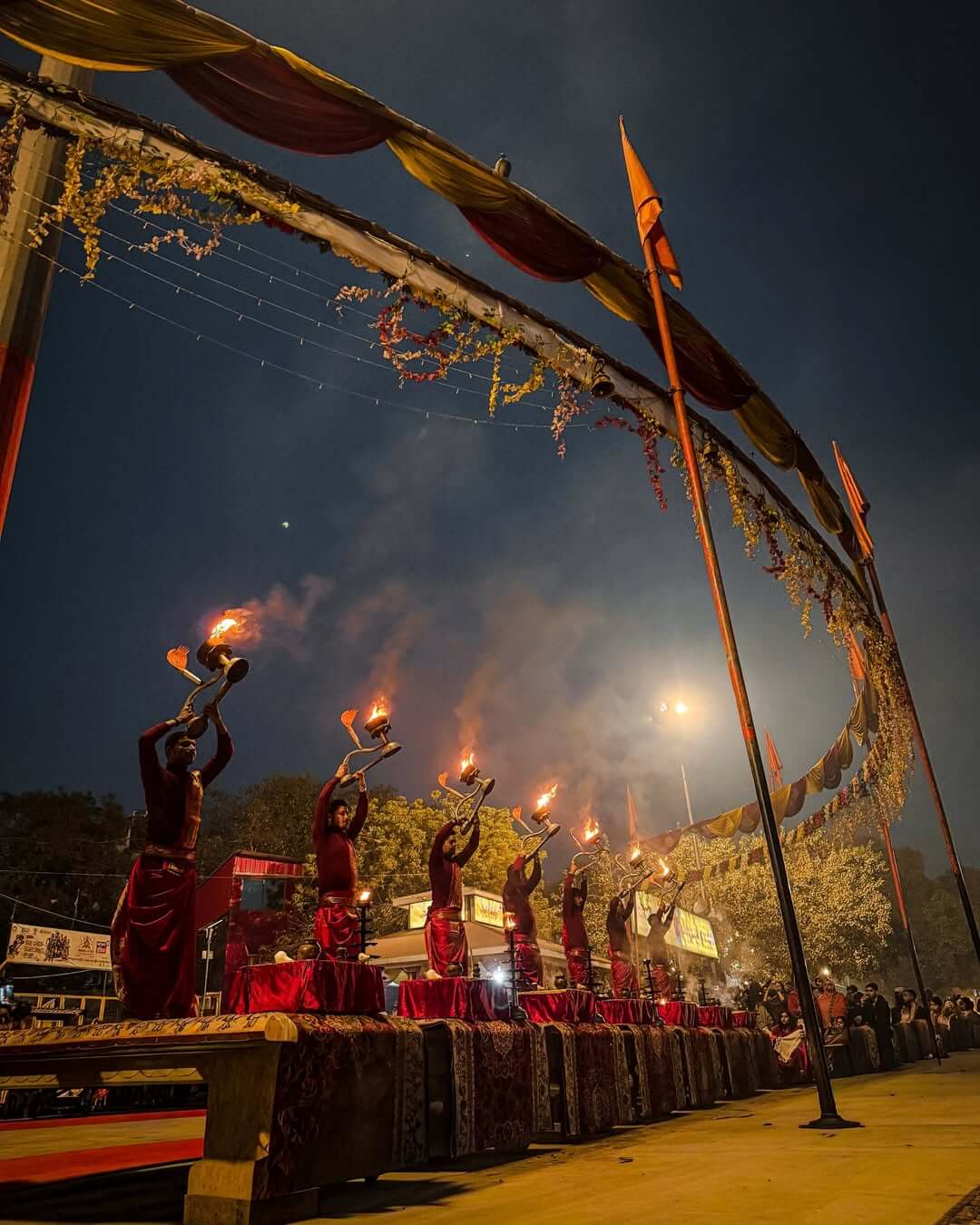
A traditional Ganga Aarti performed by priests at the water’s edge as the sky begins to lighten — this is the Subah-e-Banaras Ganga Aarti most visitors come to see.
Classical Music Performance
A live performance of Prabhati ragas by local classical artists, typically lasting about 30 minutes.
Open-Air Yoga Session
The programme closes with a free yoga session open to everyone — locals, travellers, children and elders alike.
Subah e Banaras Tour Timing & Where It Happens
| Detail | Info |
|---|---|
| Subah-e-Banaras Aarti Time | Approximately 45 minutes before sunrise — typically 5:00 AM to 5:30 AM depending on the season |
| Total Duration | Around 2 hours |
| Venue | Assi Ghat, southern end of the Varanasi riverfront |
| Best Months to Attend | October to February for cooler weather and the clearest sunrise views |
| Frequency | Held every single morning, throughout the year |
Subah-e-Banaras vs Dashashwamedh Ghat Evening Ganga Aarti
If you’re deciding whether to add a Subah e Banaras Tour or an evening aarti visit to your itinerary, here’s the difference. A common question travellers ask is which Ganga Aarti is better in Varanasi — the morning Subah-e-Banaras at Assi Ghat, or the evening Ganga Aarti at Dashashwamedh Ghat. Both happen daily, but they offer very different moods.
| Detail | Subah-e-Banaras (Morning) | Dashashwamedh Ghat (Evening) |
|---|---|---|
| Timing | ~5:00-5:30 AM, before sunrise | ~6:00-7:00 PM, at sunset |
| Crowd | Smaller, more local | Large, often packed with tourists |
| Atmosphere | Calm, meditative, includes yoga and music | Grand, elaborate, multiple priests performing together |
| Cost | Free | Free (paid boat seating optional) |
How to Reach Assi Ghat for a Subah e Banaras Tour
Since Subah-e-Banaras begins well before sunrise, public transport and autos are hard to find at that hour. Most travellers prefer a pre-booked cab that arrives at their hotel around 4:30-5:00 AM, ensuring they reach the ghat with time to settle in before the chants begin.
| From | Distance | Approx. Time |
|---|---|---|
| Varanasi Junction (Cantt Station) | ~6.5 km | 20-30 minutes by cab |
| Varanasi Airport | ~25 km | 45-60 minutes by cab |
| BHU area | ~1.5 km | 5-10 minutes by cab |
ShriKashiTrip provides a dedicated Subah e Banaras Tour with pickup and drop timed precisely so you don’t miss the start of the programme.
Why Book Your Subah e Banaras Tour with ShriKashiTrip
A well-planned Subah e Banaras Tour depends on timing more than anything else, since the programme starts before sunrise. Here’s why travellers choose ShriKashiTrip for this:
- ✅ Guaranteed early morning pickup — no last-minute scramble for an auto in the dark
- ✅ Drivers who know the exact drop point closest to the Subah-e-Banaras stage at Assi Ghat
- ✅ Straightforward booking process and clear pricing — no hidden charges
- ✅ Option to continue straight into a sunrise Ganga boat ride right after the programme ends
- ✅ Wait-and-return service if you’d like to explore the ghat afterward
Subah e Banaras Tour — Frequently Asked Questions
What is Subah-e-Banaras?
Subah-e-Banaras is a daily pre-dawn cultural programme at Assi Ghat in Varanasi, combining Vedic chanting, a Sapta Aarti, classical music, and open-air yoga, held every morning before sunrise.
What is Subah-e-Banaras Ganga Aarti in Varanasi?
The Subah-e-Banaras Ganga Aarti is the Sapta Aarti performed at Assi Ghat as part of the morning programme, offered to the river at sunrise by a group of priests, distinct from the larger evening Ganga Aarti at Dashashwamedh Ghat.
What are the Ganga Aarti timings today in Varanasi, morning and evening?
The morning Subah-e-Banaras Aarti at Assi Ghat begins around 5:00 AM to 5:30 AM, while the evening Ganga Aarti at Dashashwamedh Ghat usually starts around sunset, roughly 6:00 PM to 7:00 PM depending on the season.
Which Ganga Aarti is better in Varanasi, morning or evening?
Both offer different experiences: the evening Dashashwamedh Ghat Aarti is grander and more crowded, while the morning Subah-e-Banaras at Assi Ghat is quieter, more participatory, and pairs naturally with sunrise views over the Ganges.
How do I book a Subah e Banaras Tour in Varanasi?
You can book a Subah e Banaras Tour with ShriKashiTrip by calling or messaging on WhatsApp; the tour includes an early morning pickup timed for the programme and drop-off close to the Assi Ghat stage.
What is the Subah-e-Banaras timing / aarti time?
The Subah-e-Banaras aarti time is typically 5:00 AM to 5:30 AM, roughly 45 minutes before sunrise, and the full programme runs for about two hours from start to finish.
Where is Subah-e-Banaras held?
It’s held daily at Assi Ghat, at the southern end of the Varanasi riverfront.
Is Subah-e-Banaras free to attend, or are there tickets?
The programme itself is completely free with no tickets required; only a guided Subah e Banaras Tour with transport and a local host, like the one arranged by ShriKashiTrip, carries a cost.
What does Subah-e-Banaras mean?
Subah-e-Banaras translates to “The Morning of Banaras,” referring to the belief that mornings in Kashi carry a distinct, sacred energy worth celebrating with music, prayer, and yoga.
When did Subah-e-Banaras start?
Subah-e-Banaras began on 24 November 2014 as a community cultural initiative and has been held daily ever since.
Is Ganga Aarti happening in Varanasi every day, morning and evening?
Yes, both aartis are held daily without exception — Subah-e-Banaras every morning at Assi Ghat and the main Ganga Aarti every evening at Dashashwamedh Ghat.
What is the best time of year to attend?
October to February is the best window, offering cooler weather and the clearest sunrise visibility over the Ganges.
Can I combine Subah-e-Banaras with a boat ride?
Yes, a sunrise boat ride immediately after the programme is one of the most popular combinations. See our Ganga boat ride page for details.
Are there any well-known Subah-e-Banaras quotes?
Subah-e-Banaras is often described locally with lines about how the morning of Kashi belongs to the gods, reflecting the belief that dawn on the ghats has a spiritual quality unlike anywhere else.
Book Your Subah e Banaras Tour Today
Don’t miss sunrise on the Ganga. Let ShriKashiTrip handle the timing.